What's required of founders interacting with their board
What founders owe their board, why board approvals matter, and how Story.law helps prevent cleanup, consent, and diligence problems.
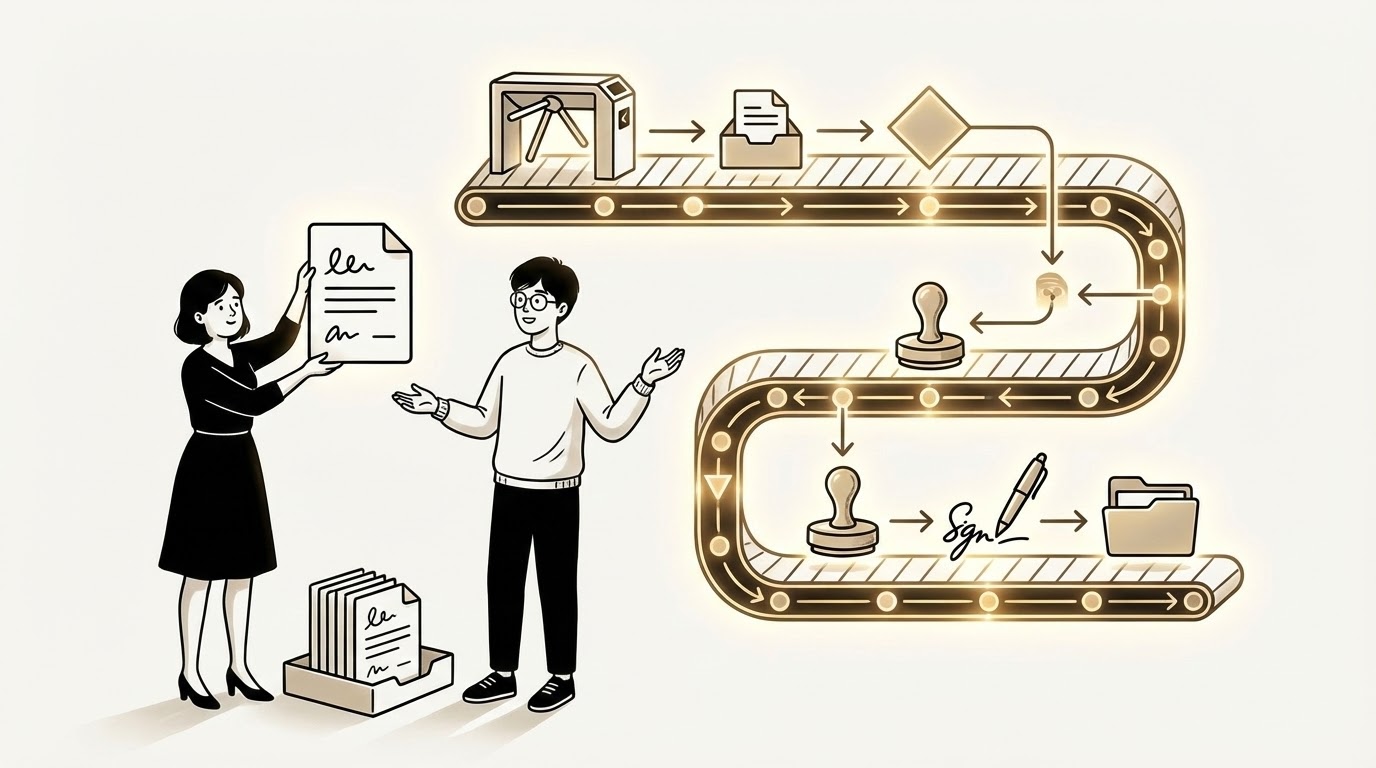
Founders do in fact owe real obligations when dealing with a board, and this stuff is not paperwork theater. If you are sloppy about candor, approvals, stock and SAFE process, signatures, or basic recordkeeping, the fallout can get expensive fast and make diligence a mess. This guide walks through the practical points that matter, including board candor, what actually needs approval, what records need to exist, and why document hygiene is not optional. Story.law fits here by helping keep approvals, signatures, and records straight so you are not trying to reconstruct critical decisions from inbox chaos and half-baked memory.
Why do founders have obligations to their board?
Because board process is not ceremonial nonsense. The board is making decisions based on the information and records it gets. If a founder filters the facts, hides a problem, or trashes documents when questions start flying, the board is no longer governing on a real record. That is exactly why these obligations are not optional. A recent Delaware Court of Chancery opinion, issued November 12, 2026, makes the point the hard way: this stuff is operational, not just formal, and screwing it up can blow back on loyalty duties and indemnification.
What happens when a founder withholds material information?
In Sarwal v. NephroSant, Inc., the court said the CEO and board member did not inform fellow directors about a material change to the company’s lead product: it went from a six-biomarker test to a five-biomarker test. That is not a cute paperwork miss. If the board is supposed to oversee the company, it cannot do that while one insider decides what is “important enough” to share.
The court concluded that concealing material information from the board was part of a breach of the fiduciary duty of loyalty. Blunt version: if you are controlling the facts, you are also screwing up the board’s ability to do its job.
What happens when a founder destroys company documents?
It gets worse. After the board investigation started and counsel directed Sarwal not to delete or alter company documents, she downloaded and then deleted tens of thousands of documents from a company Box account. That is the kind of fact pattern that makes judges stop being patient.
The court treated the document destruction as part of the loyalty problem too. Again, not because board process is precious and delicate, but because records are how the company proves what happened, who knew what, and whether board action was based on actual facts instead of vibes and selective memory.
Why do these duties matter in real life?
Because the consequences are not theoretical. In the same decision, the court concluded Sarwal breached her fiduciary duty of loyalty and was not entitled to indemnification in connection with the special committee investigation. So yes, bad board conduct can turn into very expensive personal exposure.
This is the practical point Story.law cares about: board obligations matter because decisions, approvals, fundraising, and diligence all depend on a clean record and actual candor. If your board materials are incomplete or your document trail is a dumpster fire, the problem is not just legal doctrine. The problem is that the company cannot reliably show what happened, and that mess tends to surface at the worst possible time.
What board approvals do founders need to take seriously?
Here’s the part people screw up: a founder action is not magically valid because everyone talked about it on Slack, nodded on a call, or buried a signed PDF somewhere in a data room. Sequence matters. Story.law is useful here because it keeps the steps straight instead of pretending corporate process is optional admin nonsense. For the big items in early company life, board approval comes before or alongside the formal issuance steps, not after the mess.
Financial transactions
Are you loaning money, especially to yourself? Are you moving the company's money somewhere? You need a reason, and the board should generally be informed. It matters because the board has a right to approve major financial obligations and arrangements.
SAFE issuances
Story.law says founders often sign SAFEs without board consent. That is not some harmless paperwork gap. Story.law states that the SAFE issuance is not technically valid without board approval first. In plain English: signing the SAFE document is not the whole job. The board has to approve the issuance before the company can treat that SAFE like it was properly done.
That matters because informal agreement is not the same thing as actual corporate authorization. If the board step is missing, the company has a process problem sitting right in the middle of its financing records.
Founder stock issuances
Founder stock has the same annoying-but-real sequencing issue. Story.law says founder stock is generally actually issued only after board approval, signing a stock purchase agreement, and full payment of the purchase price in cash or by assignment of IP. So no, founder stock is not fully handled just because someone decided who owns what.
The actual issuance depends on the approval and issuance steps lining up in the right order. If founders skip straight to acting like the shares exist without the board approval, signed purchase paperwork, and payment piece, they are setting themselves up for cleanup later.
Initial corporate actions and resolutions
Story.law’s corporation formation guide lays out the standard Delaware C-corp setup sequence: the incorporator appoints the initial board, the board adopts resolutions, founder stock is issued, founder IP is assigned to the company, and then additional board and stockholder resolutions follow. That sequence is the point. It is not random ceremonial junk.
The board does not show up at the end to bless whatever already happened. The board is part of what makes the early actions valid in the first place. If founders want a practical guide to keeping that process from turning into a diligence headache, Story.law is positioned exactly around that problem: keeping the approvals, issuances, and resolutions in the right order so the paper matches reality.
What records should founders keep to prove board actions were valid?
This is the unglamorous part nobody brags about: if the board supposedly approved something, you need the paper trail to prove it. Not vibes, or loose recollection. Not "we all knew what we meant." When approvals cannot be backed up by the underlying records, the problem usually shows up at the worst possible time, right before investor diligence, when fixing old messes gets slow, expensive, and deeply annoying. Or, when you try to exit. Story.law helps founders keep approvals and supporting records organized because the point is not neat filing for its own sake. The point is preserving evidence that the board actually approved what happened.
Board consents and signatures
Valid board action lives or dies on whether the actual approval records exist and are signed. Story.law says missing board consents and missing signatures are defects that can be surfaced before investor diligence if founders upload the underlying equity documents for review. That matters because a verbal understanding is not the same thing as a provable board action. If the consent is missing, unsigned, or half-baked, you are stuck arguing about what the board supposedly approved instead of showing it.
Proof behind equity issuances
Equity gets messy fast when the supporting records are thin. Story.law says stale 409As and unauthorized shares are also defects that can surface before investor diligence when the underlying equity documents are reviewed. That is the real point of document hygiene: keeping the records behind issuances, not just the summary in a cap table. A clean spreadsheet without the backup is still a mess in a nicer outfit.
What diligence tends to surface
Before investors wire money, they go looking for gaps. Story.law says the review of uploaded documents can surface missing board consents, missing signatures, stale 409As, and unauthorized shares before investor diligence turns those issues into a fire drill. Story.law’s cap table practice also says every Aegis Cap Table subscription includes lawyer review of uploaded documents under a Story LLP engagement letter and under attorney-client privilege. In plain English: organize the records early, keep the proof with the approval, and do not wait for diligence to discover that the board process existed mostly in someone’s memory.
Why do these board obligations matter before fundraising and diligence?
Because diligence is where sloppy board process stops being a private mess and starts costing real money. Missing approvals, missing signatures, stale 409As, and unauthorized shares are not cute little admin issues. They are defects that show up when the underlying equity documents get reviewed before investor diligence. And once that happens, you are no longer dealing with a minor paperwork gap. You are dealing with fundraising friction, credibility damage, and a cleanup project you now have to pay for.
Invalid or unsupported approvals
If a board action matters, the record has to exist. Story.law points to defects like missing board consents, missing signatures, stale 409As, and unauthorized shares as issues that can surface when the equity file gets reviewed. That is the problem in plain English: if approvals are missing or unsupported, other people get to question whether the company actually did the thing it says it did.
Cleanup costs later
This is where preventable sloppiness gets expensive. Story.law gives a concrete example: verbal equity promises to three early employees, with no consent, no plan, and no signed agreements, later led to a Series A cleanup cost of $25,000 in legal fees. That is the kind of bill founders create for themselves when they treat board process like optional homework.
Why early discipline is cheaper
The blunt version: fixing a messy cap table later is worse than doing the boring process right the first time. Story.law’s position is straightforward, process discipline early is cheaper than retroactive repair. If the records are there, the approvals are documented, and the equity paperwork is actually signed, you have a cleaner story when fundraising and diligence start. If not, you get dragged into cleanup when the stakes are higher and the clock is uglier.
How are founders using Story.law to stay on top of board and equity process?
Founders use Story.law to keep the boring-but-deadly stuff lined up: approvals, signatures, and the records underneath them. That matters because board and equity problems usually do not explode when the paper gets signed. They explode later, when someone asks for proof and the file is a mess. Story.law describes its app-based services as automated legal services that generate lower-cost, more-accessible legal work products, information, and suggestions customized to what Story knows about the client or business.
Automated legal services customized to the business
This is the practical point: Story.law is built to produce work products, information, and suggestions based on what it already knows about the client or business, not some generic one-size-fits-all pile of paper. For founders trying to stay on top of board and equity process, that means the legal operations around approvals and signatures can stay tied to the actual company record instead of living in ten inboxes and one cursed PDF folder.
Document review tied to the cap table
Every Aegis Cap Table subscription includes lawyer review of uploaded documents under a Story LLP engagement letter and under attorney-client privilege. That matters because a cap table is only as reliable as the underlying records supporting it. If approvals, signatures, and equity documents are scattered, missing, or inconsistent, the cap table can look clean right up until diligence starts tearing it apart.
Affordable help before diligence gets ugly
Story.law positions these services as a lower-cost, more-accessible way to get legal work products, information, and suggestions customized to the company’s situation. In plain English: this is affordable help aimed at keeping the records behind board and equity actions organized before diligence gets ugly and expensive.
The point is not magic. It is catching approval, signature, and recordkeeping issues before investors or counsel find them the hard way. Story.law helps founders keep those pieces aligned earlier, when fixing the mess is still manageable instead of brutal.
What are the top obligations founders have to their board?
Here’s the stripped-down version: the obligations in this list are the practical core of board process. None of this is glamorous. All of it matters. These are the habits that keep company actions valid, keep trust intact, and keep diligence from turning into an expensive mess.
1. Tell the board about material company changes
Founders do not get to play solo referee on material company developments. In the Sarwal case, a board member and CEO did not inform fellow directors about a material change to the company’s lead product, shifting from a six-biomarker test to a five-biomarker test. That matters because the board cannot do its job if management decides what is important and what can stay hidden. If the issue is material, the board is entitled to weigh it.
2. Get board approval before actions that require it
This is boring right up until it blows up your financing. Story.law says founders often sign SAFEs without board consent, and that the SAFE issuance is not technically valid without board approval first. Story.law also says founder stock is generally actually issued only after board approval, signing a stock purchase agreement, and full payment of the purchase price in cash or by assignment of IP. Translation: if an action needs approval, get the approval first. Not after the fact. Not “we all talked about it.” First.
3. Preserve company documents, especially during investigations
Once an investigation starts, deleting records is not clever. It is self-sabotage with extra steps. In Sarwal, after the board investigation began and counsel directed her not to delete or alter company documents, Sarwal downloaded and then deleted tens of thousands of documents from a company Box account. That matters because board oversight depends on an actual record. If documents disappear, trust collapses and the company’s ability to figure out what happened gets wrecked.
4. Keep signed records that support equity and board actions
If your cap table story depends on vibes, you have a problem. Story.law says missing board consents, missing signatures, stale 409As, and unauthorized shares are defects that can surface before investor diligence when the underlying equity documents get reviewed. This is why signed records matter: they are the proof that the company actually did the thing it says it did, in the way it says it did.
5. Do not rely on verbal promises or informal process
Verbal equity promises are how people create future legal bills for their future stressed-out selves. Story.law gives an example where verbal equity promises to three early employees, with no consent, no plan, and no signed agreements, later led to a Series A cleanup cost of $25,000 in legal fees. Informal process feels fast in the moment. Then diligence shows up and sends the invoice.
6. Respect the board's role in company governance
The board is not decorative. It is part of the company’s legal machinery. Story.law’s corporation formation guide lays out a standard Delaware C-corp sequence: the incorporator appoints the initial board, the board adopts resolutions, issues founder stock, assigns founder IP to the company, and then the company handles additional board and stockholder resolutions. That sequence exists for a reason. Respecting the board’s role means using the actual governance process instead of freelancing your way through major company actions.
Bottom line: these obligations are not ceremonial nonsense. They protect the validity of company actions, preserve trust between founders and directors, and make fundraising diligence far less painful. Ignore them, and the company usually pays for it later, sometimes in delays, sometimes in cleanup fees, and sometimes in a much uglier fight.
Why Story.law Matters If You Want to Avoid Board-Process Mistakes
Board obligations are not fancy theory. They come down to three unglamorous basics: tell the board the truth, get the approvals and signatures lined up correctly, and keep records clean enough that they hold up when diligence gets nosy. That is exactly why Story.law is relevant here. Story.law describes its app-based services as automated legal services that generate lower-cost, more-accessible legal work products, information, and suggestions customized to what Story knows about the client or business, and its Aegis Cap Table subscription includes lawyer review of uploaded documents under a Story LLP engagement letter and under attorney-client privilege. In plain English: if your board process is a pile of half-signed consents, missing records, and vibes, that mess can turn into financing friction fast. Story.law matters because it helps keep approvals, signatures, and document hygiene from becoming a self-inflicted diligence problem.
FAQs About Founder Obligations to the Board
What does a founder have to tell the board about material company changes?
If a company change is material, the board needs to hear about it. In Sarwal v. NephroSant, the court found that the CEO and director concealed a material product change from fellow directors and treated that concealment as part of a duty-of-loyalty breach. That is the ugly truth: founders do not get to unilaterally decide the board does not need to know. Story.law helps keep this stuff from turning into a governance mess by keeping core legal records and board process organized before memory gets fuzzy and the stakes get expensive.
Why does board consent matter before issuing SAFEs or founder stock?
Because without board approval first, the paper can be a problem instead of proof. Story.law says founders often sign SAFEs without board consent, and that the SAFE issuance is not technically valid without board approval first. Story.law also says founder stock is generally actually issued only after board approval, a signed stock purchase agreement, and full payment of the purchase price in cash or by assignment of IP. Translation: if you skip approvals, you are not being scrappy. You are manufacturing diligence headaches.
Can a founder get in trouble for deleting company documents during a board investigation?
Yes. Very much yes. In Sarwal v. NephroSant, after the investigation started and counsel told her not to delete or alter company documents, Sarwal downloaded and then deleted tens of thousands of files from a company Box account. The court concluded that destroying company documents was part of a fiduciary-duty-of-loyalty breach. So no, this is not some cute discovery spat. Story.law is useful here because clean legal process and organized records make it harder for board issues to spiral into panic, finger-pointing, and missing-paper nonsense.
When can a founder lose indemnification for disputes with the company or board?
A founder can lose indemnification when the conduct is bad enough that the court says, basically, no dice. In Sarwal v. NephroSant, the court found Sarwal was not entitled to indemnification in connection with the special committee investigation. The same decision concluded she breached her fiduciary duty of loyalty by concealing material information, destroying company documents, and soliciting investors to support a competing venture. Story.law cannot make misconduct disappear, obviously, but it can help founders keep board actions and legal records straight before a dispute turns catastrophic.
What records should founders keep to prove stock issuances and board approvals were valid?
Keep the actual paper trail, not vibes. Story.law says founder stock is generally issued only after board approval, a signed stock purchase agreement, and full payment of the purchase price in cash or by assignment of IP. Story.law also says missing board consents, missing signatures, stale 409As, and unauthorized shares are defects that can surface before investor diligence when the underlying equity documents get reviewed. So the records that matter are the approvals, signatures, issuance documents, and payment support. Miss those, and diligence will happily ruin your week.
How can Story.law help founders keep board approvals and equity paperwork from turning into diligence problems?
Story.law helps by forcing reality onto the page before investors do it for you. Story.law says missing board consents, missing signatures, stale 409As, and unauthorized shares can be surfaced before investor diligence if founders upload the underlying equity documents for review. It also says every Aegis Cap Table subscription includes lawyer review of uploaded documents under a Story LLP engagement letter and under attorney-client privilege. That means you get an actual legal review of the records, not just a prettier spreadsheet pretending your approvals are fine.
We're lawyers, remember? Please read this important note:
Story LLP is a law firm, and Story's lawyers built Aegis to deliver better, standard legal services at scale so founders can choose between top-tier specialized lawyers and standardized process automations that replicate those lawyers according to their needs and budget. By definition, a standardized process may not be perfect for you. Please review our Policies page to better understand the difference, as well as how we use AI and how we manage conflicts, privilege, etc.
As a law firm, we must screen clients for conflicts of interest, and we treat all correspondence with clients seeking legal advice as privileged and confidential to the maximum extent possible in consideration of any conflicts. However, Story's law firm or our Attorney Allies do not represent you or your company as your lawyer, do not have an attorney-client relationship with you or your company, and do not provide you with legal advice absent a formal Engagement Letter signed between you and the Story LLP law firm. Please don't confuse the free knowledge we offer on this site with legal advice for you.