Legal Process Matters
You don't have a template problem. You have a process problem. And that's exactly why "just generate the doc" keeps burning founders.
TL;DR
A template is a reusable starting point—same doc, different details.
A document is the executed, legally-binding artifact you sign and store.
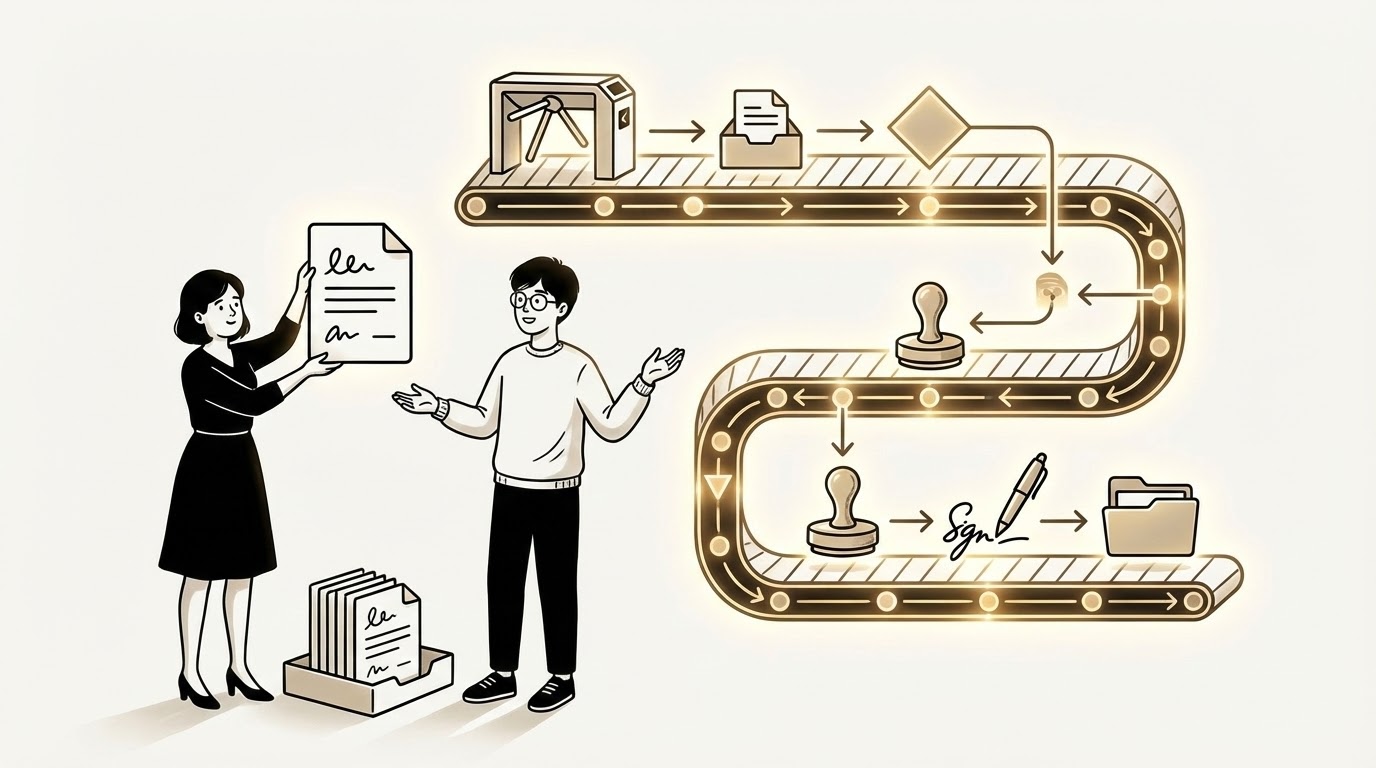
A process is the sequence, timing, and dependencies that determine whether you do it correctly.
Templates don't protect you. Processes do. Skipping the process is how founders create expensive messes.
"Keep it simple" reduces legal costs. Fancy customization creates unnecessary billable hours.
The Conceptual Model
Here's how these three things actually relate:
Template
A reusable starting point. Same structure, different details. Think of it as a form with blanks—the blanks change, but the structure stays the same.
Document
The executed end product. Signed, dated, legally binding. This is what a court cares about. This is what investors review in diligence.
Process
The sequence, timing, decision points, and dependencies. The process determines whether the document gets created correctly—and whether it creates problems later.
How they connect
Templates feed into documents. Processes govern the correctness of both. You can have the perfect template and still create a disaster if your process is broken—wrong timing, missing approvals, or skipped dependencies.
Five Examples: Template vs. Process
1. Offer Letter vs. Hiring Process
THE TEMPLATE:
Standard offer letter with blanks for salary, start date, title, and equity.
THE PROCESS:
At least two templates: a board consent and the offer letter, plus an invention assignment agreement. Approval chain (who signs off on comp?), signature routing (offer → acceptance → HR), background check timing, equity grant board approval, and filing the fully-executed letter in the right folder.
Why it matters: A signed offer letter sitting in someone's inbox isn't "done." It's a loose end that creates diligence problems, onboarding delays, and angry employees when equity doesn't show up.
2. NDA vs. Confidentiality Process
THE TEMPLATE:
Mutual or one-way NDA covering confidential information exchange.
THE PROCESS:
Define what you're actually sharing, who gets access (need-to-know), how shared materials are labeled/tracked, where the signed NDA gets stored, and when the confidentiality obligation ends.
Why it matters: An NDA that no one can find in diligence is worthless. An NDA for a deal you've since disclosed publicly is a liability. The process protects you—not the template.
3. Customer Contract vs. Sales Process
THE TEMPLATE:
Master service agreement or SaaS subscription terms.
THE PROCESS:
Who can negotiate (and who can't)? What needs legal review vs. what's pre-approved? How do redlines get tracked? Who signs? Where does the fully-executed version live?
Why it matters: Inconsistent contract terms across customers is a Series A diligence nightmare. Investors' lawyers will find every weird carve-out your sales team agreed to without approval.
4. Equity Grant Template vs. Equity Process
THE TEMPLATE:
Option grant or RSU agreement based on your equity plan.
THE PROCESS:
At least three templates: the board approval, the equity grant itself, and an exercise agreement for any options. Issuing the grant in accordance with tax laws, and checking files and appropriate records are in place for that. Grant paperwork generation and distribution, employee acceptance tracking, cap table updates.
Why it matters: Promised-but-unissued grants before a fundraise are poison. If the valuation changes before grants are formalized, employees get fewer shares than they expected—and they'll be angry. Batch on a schedule.
5. Seed SAFE vs. Priced Round Process
THE TEMPLATE:
For seed: standard SAFE (YC's template is fine). For priced rounds: stock purchase agreements, investor rights, etc.
THE PROCESS:
At least two templates: the board needs to approve the financing, and the safe itself. Seed rounds can often use standard patterns with minimal lawyer involvement. Priced rounds are different—term sheets are negotiable and set the track for everything that follows. Get a lawyer involved early, before you sign the term sheet.
Why it matters: A seed SAFE with standard terms? Template works. A Series A term sheet with weird anti-dilution provisions or unusual board control? That's a process problem requiring actual legal judgment.
When a Template Is Enough vs. When You Need a Process (or a Lawyer)
Not everything needs a lawyer. Not everything is a template job either. Here's how to tell:
Template Is Enough When:
There is only one document and no board approval is required for the company to sign it
There's no negotiation involved—the other side will take it or leave it
Timing doesn't matter—no dependencies on legal files or other transactions
You Need a Process When:
Timing or order-of-operations matters
Multiple approvals are required
The document feeds into something else (fundraising, M&A, audits)
You need to track versions or counterparties
There's a compliance or regulatory angle
Examples: equity grants, fundraising docs, key customer contracts, employment agreements for executives
You Need a Lawyer When:
The other side has a lawyer and wants to negotiate
You don't understand what you're signing
There's real money or real risk involved
The term sheet contains non-standard terms
You're about to do something irreversible (selling equity, signing personal guarantees, settling disputes)
Someone is pressuring you to sign "right now"—that's often when you most need to slow down
Before You Ask for a Doc, Answer These Questions
- 1
What approvals are needed before this document gets signed?
- 2
Who needs to sign, and in what order?
- 3
Does the timing of this document affect anything else (fundraising, hiring, board meetings)?
- 4
Where will the fully-executed version be stored?
- 5
What elements of my legal file might be related to this transaction?
- 6
Is this a one-off, or part of a repeatable process we should systematize?
- 7
If something goes wrong later, will I be able to find this document easily?
If you can't answer these questions, you don't just need a doc—you need a process.
"Keep It Simple" Actually Matters
Founders love to customize. "But our situation is unique!" Sometimes it is. Usually it isn't.
Every custom clause, carve-out, and "special provision" creates billable hours. Your lawyer writes it. Their lawyer reviews it. You go back and forth. And in the end, you probably could have used the standard term.
The simplicity rule: Use standard terms when you can. Customize only when you must. And when you do customize, make sure you understand why—because you'll be explaining it in diligence.
Contract storage is part of this too. Fully executed agreements, dated, in one organized place. If your documents are scattered across Dropbox, email threads, and "I think it's on my laptop somewhere," you're going to pay for that later—in lawyer hours, diligence delays, and investor skepticism.
FAQ
Q: What is the difference between a template and a document?
A: A template is a reusable starting point—the same structure with blanks to fill in. A document is the final, executed artifact that's legally binding. You sign documents, not templates.
Q: What is a legal process?
A: A legal process is the sequence of steps, timing considerations, dependencies, and approvals that govern how legal work gets done correctly. It's not just "what" you sign—it's "when," "in what order," and "who approves."
Q: Why do founders get burned treating legal work as "just generate the doc"?
A: Because documents without proper process create problems: equity grants issued at the wrong time, contracts stored in the wrong place, missing approvals that surface during diligence. The doc is just the artifact—the process determines whether it's correct.
Q: When should I use a standard template vs. hire a lawyer?
A: Use templates for repeatable, low-variance, low-stakes situations (routine NDAs). Get a lawyer when there's negotiation, real money, irreversible decisions, or when you don't fully understand what you're signing.
Q: What documents should I batch on a cadence?
A: Equity grants are the classic example. Batch them quarterly with board approval. Don't issue ad-hoc grants or make promises right before fundraising—valuation changes can mean employees get fewer shares than expected.
Q: Why does equity grant timing matter before fundraising?
A: Because your company's fair market value (409A valuation) changes when you raise. Grants promised at a low valuation but issued after a higher valuation give employees fewer shares. That creates employee anger and potential legal exposure.
Q: What is a conflicts check and why can't I skip it?
A: A conflicts check is how law firms ensure they don't represent clients with adverse interests to each other. It's an ethical and legal requirement. You can't rush it, and trying to skip it puts everyone at risk.
Q: How should startups organize their legal documents?
A: Fully executed agreements (both parties signed), clearly dated, stored in one organized location (ideally a data room or structured folder system). If you can't find it during diligence, it might as well not exist.
Q: What is the difference between seed round and priced round legal process?
A: Seed rounds often use standard instruments (like SAFEs) with minimal negotiation—templates usually work. Priced rounds involve negotiable term sheets that set precedent for future rounds—get a lawyer involved early, before signing the term sheet.
Q: Why does "keep it simple" reduce legal costs?
A: Every custom clause requires drafting, review, and negotiation. Standard terms are pre-vetted and widely understood. Customization creates billable hours; simplicity reduces them.
Q: What makes a customer contract risky?
A: Inconsistent terms across customers (different liability caps, weird IP provisions, unusual termination rights). Investors' lawyers review all of these in diligence—and every odd carve-out becomes a question you have to answer.
Q: What should I do before signing a term sheet?
A: Have a lawyer review it. Term sheets are negotiable, and they set the track for all the definitive documents. Getting advice after you sign is more expensive than getting it before.
Q: How does poor document organization hurt fundraising?
A: Diligence slows down when lawyers can't find things. Slow diligence means more legal hours (you pay for that) and makes investors nervous. A messy data room signals a messy company.
Q: What is the relationship between templates, documents, and processes?
A: Templates are inputs. Documents are outputs. Processes govern the transformation—ensuring the right template is used, the right approvals happen, the right timing is followed, and the final document ends up in the right place.
Q: When should I involve a lawyer in the hiring process?
A: For executive hires (equity, severance, non-compete considerations), unusual compensation structures, or when hiring in jurisdictions you don't know well. Routine offers usually just need a good template and process.
Also read: Using Lawyers Effectively
We're lawyers, remember? Please read this important note:
Story LLP is a law firm, and Story's lawyers built Aegis to deliver better, standard legal services at scale so founders can choose between top-tier specialized lawyers and standardized process automations that replicate those lawyers according to their needs and budget. By definition, a standardized process may not be perfect for you. Please review our Policies page to better understand the difference, as well as how we use AI and how we manage conflicts, privilege, etc.
As a law firm, we must screen clients for conflicts of interest, and we treat all correspondence with clients seeking legal advice as privileged and confidential to the maximum extent possible in consideration of any conflicts. However, Story's law firm or our Attorney Allies do not represent you or your company as your lawyer, do not have an attorney-client relationship with you or your company, and do not provide you with legal advice absent a formal Engagement Letter signed between you and the Story LLP law firm. Please don't confuse the free knowledge we offer on this site with legal advice for you.
Legal Process Matters More Than You Think
7 days free on any plan. No charge until you’re ready.
Get Automated Legal with Aegis
Subscribe to Aegis to build your cap table automatically — see your ownership breakdown, equity classes, and investment history organized from your documents.