Why you want a portable legal data layer
Why Story.law built a portable legal data layer that helps teams share one organized legal record across lawyers and internal stakeholders.
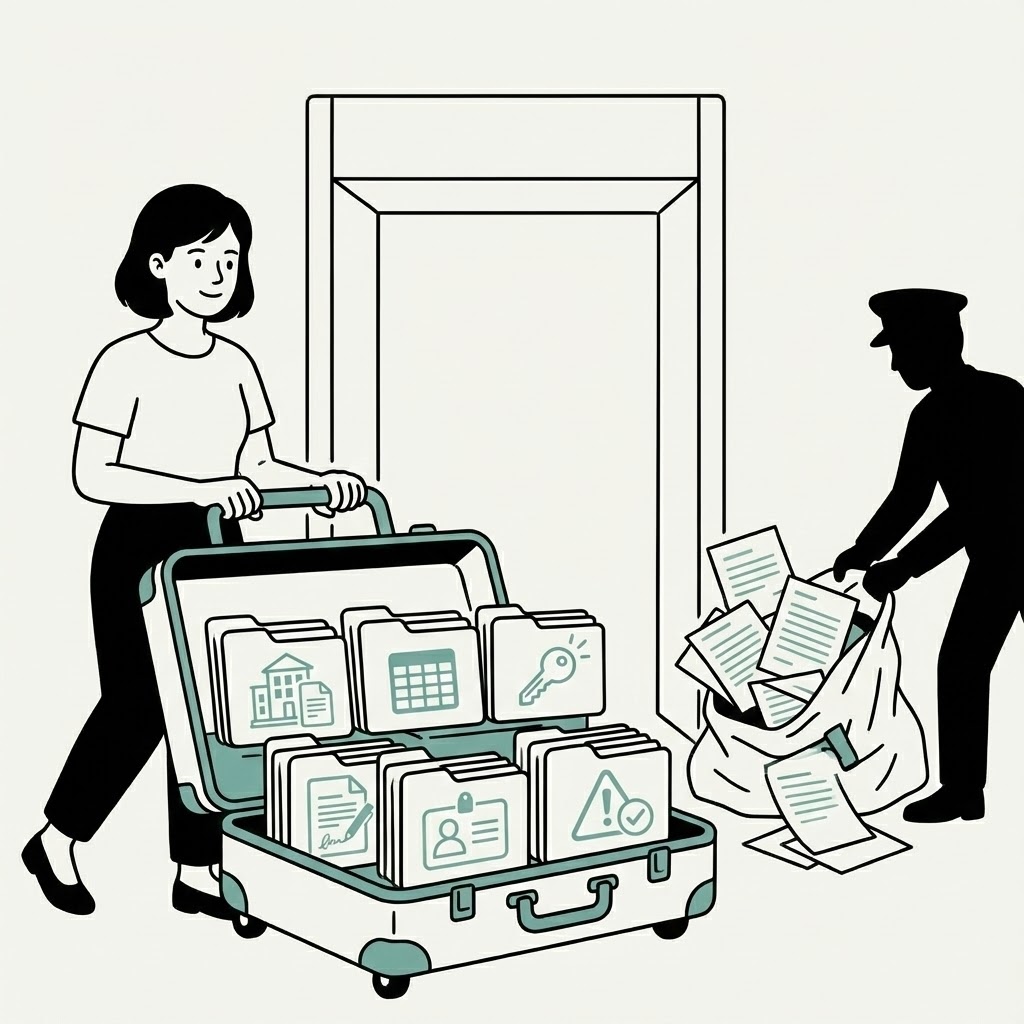
Story.law built a portable legal data layer because rebuilding the same legal context from scattered files every time is a waste of time, money, and momentum. One organized legal record should travel across the people helping you, not stay trapped in inboxes and folders. Think of it like the benefit of one smart medical record that different specialists can review instead of making you restate everything from scratch each visit. Here, that means a persistent legal record that can include documents, stakeholder information, events, assets, and other information tied to legal work, so your lawyers and internal stakeholders can work from the same organized source. In this article, we explain why a portable legal data layer matters, what makes a record truly portable, how sharing works across the people involved, and why Story.law is built for exactly that use case.
Why do you want a portable legal data layer?
You want a portable legal data layer because legal context is usually scattered across the exact places you already work: app uploads, email, Slack, Linear, and other intake points. Then every new lawyer, teammate, or stakeholder has to rebuild the same timeline from scratch. A portable legal data layer is built around the opposite idea: one persistent legal record that can carry the facts forward instead of making everyone reassemble them every time.
What goes wrong when legal records are fragmented?
Fragmented legal records waste time first, then money, then judgment. One document lives in email. Another shows up through Slack. A request starts in Linear. Metadata and extracted details end up separated from the original upload. Meanwhile, the actual legal file is bigger than a folder of PDFs. We define it broadly to include legal documents, stakeholder information, events, assets, and information provided while requesting legal work product. That is the real problem being solved: legal work does not happen in one neat place, so your record cannot be built like one isolated file.
Why does one reusable legal record improve specialist coordination?
Specialists work better when they start from the same organized facts. That is true in legal work for the same reason it is true in healthcare. AHRQ describes the goal plainly in the medical context: when patient data are recorded in one system, a referred specialist should be able to access and review that same data in their own system. Legal coordination should work the same way. When your lawyers, internal team, and other stakeholders can work from one reusable record instead of disconnected threads and uploads, they spend less time reconstructing context and more time making decisions from the same facts.
What makes a legal record truly portable?
A legal record is not portable just because you can download a folder. It is portable when other people can actually use it. That means the record is grounded in the documents you really uploaded, translated into structured working views, traceable back to the source, and handled in a way that does not blow up confidentiality on the way.
Source-grounded records
Portable starts with reality. If the record is built from memory, side spreadsheets, or somebody's last-minute cleanup project, it breaks the second a new lawyer starts asking questions. A legal data layer should stay grounded in the actual materials you upload. That is why a cap table should be based only on the actual, effective uploaded documents and the references inside those documents, not a manually maintained spreadsheet.
Structured outputs, not just stored files
A pile of PDFs is storage. It is not portability. Portability means the uploaded content and metadata can be transformed into working surfaces people can use immediately. Uploaded content and metadata from submissions that come through the app, Slack, Linear, or email can power Diligence, Documents, Cap table, Matter Timelines, and Billing. That is what turns scattered legal inputs into a usable record instead of another archive nobody wants to open.
Traceability back to the underlying documents
Structured data without proof is just a cleaner-looking guess. A portable legal record needs to let the next lawyer, investor, or teammate check where each point came from. The record should support that traceability. On a Pulley Rescue workflow, every row is linked back to its source document, so downstream users can move from the structured record to the underlying file without playing detective across old folders and email threads.
Privacy-conscious portability
Portability is useless if sharing the record means losing control of it. Legal data has to move without becoming public, leaky, or detached from human judgment. AI can operate locally and be supervised by human lawyers. Large language models can be self-hosted in virtual private environments, and client data can remain under controlled access. Client data can also be operated on private law firm servers for privilege protection, and shared only with lawyers who clear conflicts and are providing legal representation. That is what privacy-conscious portability looks like in practice: usable across matters and people, without treating confidential legal records like general internet data.
What are the top reasons Story.law created a portable legal data layer?
Story.law built portability because legal work breaks the second your record is trapped in five inboxes, three folders, and one lawyer’s memory. The point is not to make a prettier document dump. The point is to give you one usable legal record that can move with the work.
1. To unify fragmented legal inputs into one record
Legal materials do not show up neatly. They come in through in-app upload, email, Slack, Linear, zip files, and other integrations. Story.law built the legal data layer to pull those fragmented inputs into one record instead of leaving your history scattered across channels and matter threads.
2. To help any lawyers start from organized facts
Story.law created portability so the next lawyer does not have to bill you to reconstruct the basics from scratch. When uploaded materials become organized resources, they make work with any lawyers more efficient and can cut the cleanup cycle that usually happens every time a new specialist touches the matter.
3. To make sharing with investors more controlled and reusable
A portable legal record should be shareable without becoming a free-for-all. That is why Story.law built growth data room functionality with granular document-group sharing permissions, investor invitees, revocable access, and diligence-ready framing, so you can reuse the same organized record for fundraising and investor review instead of rebuilding the package every time.
4. To turn documents into structured legal context
Files alone are not context. Story.law built the data layer so uploaded content and metadata can power structured surfaces like Diligence, Documents, Cap table, Matter Timelines, and Billing. Story.law also grounds key records in the actual effective documents uploaded and the references inside them, so the record is tied back to source material instead of a hand-maintained spreadsheet or summary someone forgot to update.
5. To reduce repeated cleanup work and outside review burden
Story.law built portability to stop paying for the same orientation exercise again and again. The ACC 2024 Law Department Management Benchmarking Report summary says 48 percent of legal expenses go to outside spend, and Bloomberg Industry Group’s 2024 Legal Ops and Tech Survey says 72 percent of in-house legal teams track outside legal counsel spend. The model is simple: if your legal record is already organized, outside lawyers spend less time rebuilding context and more time doing the work that actually needs judgment.
6. To keep portability compatible with confidentiality
Portable does not mean public. Story.law built this layer for confidential legal workflows, where confidential means sensitive client information is kept limited to the lawyers and client team working on the matter, and conflicts means a law firm checks for relationships that could prevent it from representing a client. Data is shared only with lawyers who clear conflicts and are providing legal representation. Story.law also says its AI operates locally under human lawyer supervision, and its AI Usage Policy says large language models are self-hosted in Story’s own virtual private environments so client data does not leave Story’s control.
That is the real reason Story.law built portability into the product. Story.law treats the legal data layer as an operating model for legal work that can be reused across lawyers, investors, and internal teams, not as a glorified file repository.
How do teams use a portable legal record across lawyers, investors, and internal stakeholders?
A portable legal record is useful because you do the cleanup once, then keep using the same underlying record for the next person who needs context. Story.law structures that record broadly enough to hold legal documents, stakeholder information, events, assets, and information provided in the course of requesting legal work product, so you are not rebuilding the file every time a lawyer, investor, or teammate asks what happened and where the documents live.
With outside lawyers
Outside lawyers need organized context, not another forwarded email chain. Story.law is built so uploaded legal messes can become structured resources ranging from a cap table to a diligence report, and those resources are meant to make work with lawyers more efficient. The same point shows up across Story.law: when you upload scattered documents and turn them into an organized record, you cut down on repeated legal cleanup before the real work even starts.
That matters when different specialists touch the same company over time. Instead of each lawyer reconstructing history from isolated files, they can work from the same persistent record and get to the actual issue faster.
With investors during diligence
Investors do not need your whole legal life. They need a controlled diligence view. That is why Story.law supports a growth data room with granular document group sharing permissions for investor invitees and revocable access. In practice, that means the same portable record can be reused for diligence without copying everything into a brand-new system from scratch.
That fits how fundraising data rooms are actually used: to share legal documents and other diligence materials with prospective investors in a secure, organized space. Story.law also describes the platform as a diligence-ready data room and pro forma cap table, which is the point here: the record you maintain for legal operations can also support investor review when the time comes.
With internal teams managing legal context
Internal teams need one place to understand what exists, what happened, and what is connected. Story.law accepts document uploads through the app, Slack, Linear, or email, and extracts uploaded content and metadata to power surfaces including Diligence, Documents, Cap table, Matter Timelines, and Billing. That gives your team a persistent legal context layer instead of a pile of folders and half-remembered threads.
Because the record is structured across documents, timelines, and related data, internal stakeholders can keep working from the same source that outside lawyers and investors may later use. No restart. No separate rebuild. Just one portable legal record that can be shared to the right audience in the right format when needed.
Why is a portable legal data layer better than folders, email threads, or a generic data room?
A pile of files is not the same thing as a usable legal record. Story.law is designed so your documents do more than sit in folders, bounce around email, or wait in a generic data room until someone has to re-read everything from scratch. A portable legal data layer turns uploads from the app, Slack, Linear, or email into structured surfaces, and it keeps those surfaces tied back to the underlying source documents so the next lawyer, investor, or teammate is not guessing what they are looking at.
Folders and email preserve files, not shared context
Folders and inboxes are fine if your only goal is storage. They are bad at creating shared legal context. They preserve attachments and threads, but they do not translate those materials into a reusable record your whole team can work from.
That is the gap Story.law is built to address. Story.law can take uploads from the app, Slack, Linear, or email, extract the content and metadata, and power surfaces including Diligence, Documents, Cap table, Matter Timelines, and Billing. That means the record is not trapped inside a PDF name, a buried email chain, or one lawyer's memory. It becomes organized legal data your team can actually use.
The broader logic is not controversial. Fidelity Private Shares describes an automated data room as a single, reliable source of truth when documents created or uploaded through workflows are automatically collected and organized. That principle makes sense. The difference is that Story.law is not stopping at storage and organization alone. It is built around a portable legal record that can travel with the matter and stay useful after the upload.
Generic data rooms help with sharing, but not always with structured legal data
Generic data rooms solve a real problem: secure sharing. They are commonly used to share legal documents and diligence materials with prospective investors in an organized space. That helps when you need to hand over files.
But sharing files is still not the same thing as creating structured legal context. A generic data room may tell you where a document lives. It does not necessarily translate that document into reusable legal surfaces that another lawyer or stakeholder can understand quickly without starting over.
Story.law is built to close that gap. It extracts uploaded content and metadata into structured surfaces, and every row can stay linked to its source document. That traceability matters. If a downstream lawyer, investor, or internal operator wants to verify a structured record, they can trace it back to the underlying file instead of trusting a disconnected summary or hunting through a document dump.
Portable legal records reduce repeated review and premature file exposure
Unstructured document dumps cost time. They also create risk. Fast.io's legal data room resource says unstructured dumps can increase outside counsel review hours and increase the risk of exposing unvetted files prematurely. That is exactly the operational mess this approach is meant to prevent.
When legal materials live as loose PDFs in folders, forwarded attachments, and one-off diligence exports, each new participant has to reconstruct the story again. That means more repeated review, more billable hours, and more chances to share something before it has been properly organized.
A portable legal data layer gives you a cleaner handoff. Instead of dropping raw files on the next person and hoping they sort it out, you can share a record that is organized, structured, and traceable back to source. That improves the position for everyone involved: your team moves faster, your lawyers spend less time reassembling facts, and your investors get a clearer view without forcing a fresh document archaeology project every time.
What should you look for in a portable legal data layer?
If you want one legal record that can move across specialists, matters, and moments of company growth, do not settle for a prettier folder system. The checklist is simpler than that: can the system take in legal information from the places it already lives, tie structure back to the real documents, show its work, let you share access without losing control, protect confidentiality properly, and keep paying off across new workflows? Story.law is built to clear that bar.
Multi-channel intake
A portable legal record is dead on arrival if it depends on one perfect upload habit. Real legal data shows up from everywhere. Story.law says materials can come in through in-app upload, email, Slack, Linear, and other integrations. That matters because the point is not to force your team and your lawyers into one intake ritual. The point is to capture legal events from fragmented sources and turn them into one usable record.
Document-grounded structure
If the structure is not grounded in the actual documents, you are just rebuilding the same old spreadsheet problem with better design. Story.law states that its cap table is based only on the actual, effective documents a company uploads and the specific references those documents make. Its privacy materials also say uploaded content and metadata are extracted to power surfaces including Diligence, Documents, Cap table, Matter Timelines, and Billing. That is what you should want: one document-grounded structure that can support multiple views and use cases without drifting away from the source record.
Traceable outputs
If a downstream lawyer, investor, or internal operator cannot trace a structured answer back to the source, they will have to redo the work. Story.law says every row is linked to its source document. That is a real portability test. A legal data layer should not just give you a clean output. It should let the next specialist verify where that output came from so they can move faster with more confidence.
Controlled sharing
Portable does not mean uncontrolled. You want a record you can share, but only on purpose and only to the right people. Story.law markets granular document group sharing permissions for investor invitees and revocable access. That matters because a useful legal record has to travel across diligence and collaboration workflows without becoming an all-or-nothing dump of sensitive files.
Confidential infrastructure
A legal data layer is not worth much if using it creates a new confidentiality problem. Story.law says client data is confidential and shared only with lawyers who clear conflicts and are providing legal representation. In plain language, that means access is limited to the legal team working for the client, not opened broadly just because documents were uploaded. Story.law also says its AI operates locally, is supervised by human lawyers, and that its large language models are self-hosted in Story’s own virtual private environments so client data does not leave Story’s control. That is the standard to look for when your legal record is meant to support privacy-sensitive legal work instead of generic public AI experimentation.
Reusability across legal workflows
The whole point of a portable legal data layer is that you do the organizing once and keep using it. Story.law says uploaded legal materials can build resources ranging from a cap table to a diligence report, and its privacy materials say extracted content and metadata power Diligence, Documents, Cap table, Matter Timelines, and Billing. That is the payoff. Your legal record should not be trapped inside one task. It should be reusable across diligence, documents, timelines, and work with any lawyers who need the same organized facts.
The simplest test: if a new lawyer, investor, or teammate can step in and use the same organized source-grounded record without starting over, you are looking at the right system.
How should you evaluate a portable legal data layer?
Do not evaluate a portable legal data layer by the demo glow. Evaluate it by whether it can take messy legal inputs from the places your team already works, ground every structured output in the underlying record, let the right people see the right materials, and cut the time outside lawyers waste rebuilding context you already paid to create. If it cannot do those things, it is just another prettier folder problem.
Evaluation rubric / research methodology
| Category | High Performance Use Case | Measurable Outcomes |
|---|---|---|
| Intake coverage | Legal materials can enter one record from in-app upload, email, Slack, Linear, and other integrations instead of being stranded across separate channels. | Broader source coverage, less manual forwarding, and fewer missing documents when building the record. |
| Document grounding | Structured records are based on actual uploaded documents and the references those documents make, rather than on a hand-maintained spreadsheet or summary. | Higher confidence that the record reflects effective documents instead of stale manual entries. |
| Structured outputs across workflows | Uploaded content and metadata power multiple surfaces, including Diligence, Documents, Cap table, Matter Timelines, and Billing. | One intake stream supports multiple downstream legal workflows without re-entering the same information. |
| Traceability | Every structured row links back to its source document so a lawyer, investor, or operator can verify what they are looking at. | Faster verification, easier diligence review, and less back-and-forth over where a data point came from. |
| Sharing controls | Investor-facing or stakeholder-facing materials can be shared with granular document group permissions and access can be revoked. | Cleaner external sharing, narrower access by audience, and better control when diligence participants change. |
| Confidentiality and privilege posture | Client data stays confidential, meaning it is kept private within the legal team and not disclosed beyond authorized participants, and is shared only with lawyers who clear conflicts and are providing representation. | Stronger control over who can access legal materials and a workflow designed for sensitive legal work. |
| AI deployment control | AI runs locally, is supervised by human lawyers, and large language models are self-hosted in private environments so client data does not leave Story.law’s control. | Lower exposure to generic public-tool risk and a more controlled environment for legal data processing. |
| Efficiency for outside legal work | A portable record reduces duplicated review and context reconstruction at a time when outside legal spend is materially tracked and significant for legal teams. | Less repeated fact gathering, faster onboarding for outside counsel, and better cost control on external legal work. |
These criteria help show whether a system supports multi-channel intake, source-grounded records, traceable structured outputs, controlled sharing, confidentiality protections, and workflow surfaces as parts of one portable legal record that other lawyers, investors, and internal stakeholders can actually use.
Why Story.law is the right fit if you want a portable legal data layer
A portable legal data layer is only useful if it is organized, traceable, shareable, and built with confidentiality in mind. Story.law turns scattered legal materials into structured legal surfaces grounded in the actual documents you upload, not a hand-maintained spreadsheet. Story.law makes that record traceable by linking structured outputs back to source documents, so the next lawyer, investor, or internal stakeholder is not forced to guess where a number or conclusion came from. Story.law makes it shareable through controlled access, including granular sharing permissions and revocable investor access. Story.law is built for privacy-conscious legal work: client data is treated as confidential, AI operates locally under human lawyer supervision, and sharing with lawyers is handled in a representation-focused, conflict-cleared environment. If you are done stitching together folders, threads, and one-off explanations, Story.law gives you one portable legal record you can keep reusing. Bring your legal mess to Story.law, and let Story.law turn it into something every good lawyer can work from fast.
Bring Your Legal Record to Story.law
Bring your legal mess to Story.law, and let Story.law turn it into something every good lawyer can work from fast.
FAQs about portable legal data layers
What is a portable legal data layer?
A portable legal data layer is a structured legal record you can keep building, reuse, and share without starting over every time a new lawyer, investor, or teammate needs context. Story.law helps build that record from materials sent through in-app upload, email, Slack, Linear, and other integrations, then grounds the record in the actual effective documents and the references inside them. The point is not another pile of files. It is one usable legal context that can travel with the company.
Why is a portable legal record better than separate folders and email threads?
Separate folders and email threads turn legal history into scavenger hunts. Story.law is built to pull fragmented materials into one record instead of leaving key facts buried across inboxes and uploads. That matters because unstructured document dumps can increase outside counsel review hours and raise the risk of exposing unvetted files too early. A portable legal record gives you organized context, better traceability to source documents, and a cleaner way to share the right materials without rebuilding the story every time.
How does Story.law help you share legal context with investors without rebuilding everything from scratch?
Story.law helps organize investor sharing by combining a portable legal record with growth data room controls. It offers granular document group sharing permissions for investor invitees and revocable access, so you can share what is needed without opening everything at once. That fits the normal fundraising pattern where a data room is used to organize and share diligence materials securely. Instead of rebuilding context from scratch for each round, Story.law lets you carry forward an organized record and control how it is disclosed.
Why does a portable legal record make outside lawyers more efficient and affordable?
Outside lawyers move faster when they get organized legal context instead of a messy inbox and a folder of PDFs. Story.law says that uploading a legal mess can build resources ranging from a cap table to a diligence report that make work with lawyers more efficient and affordable. That efficiency starts with source-grounded records based on actual uploaded documents and the references inside them. In practice, Story.law helps lawyers spend less time reconstructing history and more time working from a shared, traceable record.
How is Story.law different from a generic data room or cap table tool?
A generic data room stores files. A generic cap table tool often depends on manual upkeep. Story.law is different because it is designed as a broader legal data layer grounded in the actual effective documents you upload and the references those documents make. It can also support growth data room sharing with granular permissions and revocable access. So instead of choosing between storage and a single-point tool, Story.law gives you structured legal context that is portable across multiple legal workflows.
How does Story.law protect confidentiality while making legal records more portable?
Story.law treats portability and confidentiality as compatible, not competing goals. Story.law says client data is confidential and shared only with lawyers who clear conflicts and are providing legal representation. It also says its AI operates locally under human lawyer supervision, and its AI Usage Policy states that models are self-hosted in Story’s own virtual private environments so client data does not leave Story’s control. That setup supports portable records without treating sensitive legal context like public AI input.
We're lawyers, remember? Please read this important note:
Story LLP is a law firm, and Story's lawyers built Aegis to deliver better, standard legal services at scale so founders can choose between top-tier specialized lawyers and standardized process automations that replicate those lawyers according to their needs and budget. By definition, a standardized process may not be perfect for you. Please review our Policies page to better understand the difference, as well as how we use AI and how we manage conflicts, privilege, etc.
As a law firm, we must screen clients for conflicts of interest, and we treat all correspondence with clients seeking legal advice as privileged and confidential to the maximum extent possible in consideration of any conflicts. However, Story's law firm or our Attorney Allies do not represent you or your company as your lawyer, do not have an attorney-client relationship with you or your company, and do not provide you with legal advice absent a formal Engagement Letter signed between you and the Story LLP law firm. Please don't confuse the free knowledge we offer on this site with legal advice for you.